The Suez Canal Returns to Life: Shipping Activity Rebounds After Years of Decline
The Suez Canal Authority (SCA) has announced the full recovery of maritime traffic and vessel transits to normal levels following the ceasefire agreement between Israel and Hamas in Gaza. The development brings renewed optimism to Egypt’s maritime and logistics sectors, which have endured years of decline due to regional conflicts and instability.
Peace Summit Restores Confidence in Egypt’s Economy
Adm. Osama Rabiee, Chairman of the Suez Canal Authority, highlighted the impact of the Sharm El-Sheikh Peace Summit, held under the leadership of President Abdel Fattah El-Sisi and attended by U.S. President Donald Trump.
Rabiee noted that the summit served as a strong vote of confidence in Egypt’s stability and opened positive prospects for the new peace framework aimed at securing trade routes across the Middle East.
The Strategic Importance of the Suez Canal
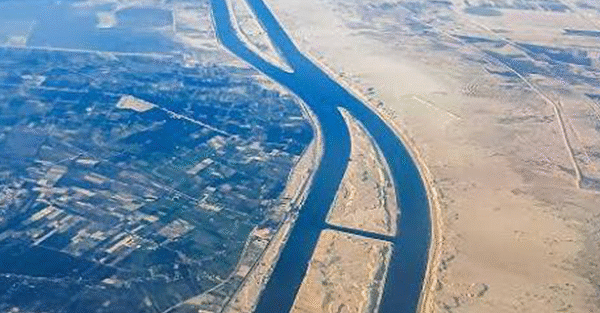
The Suez Canal remains one of the world’s most vital maritime arteries, connecting East and West and handling approximately 12% of global trade and 30% of all container traffic.
According to global shipping leaders such as Maersk, diverting vessels around the Cape of Good Hope during the Red Sea disruptions led to significant operational challenges and higher global transport costs proving that the Suez route remains essential for global supply chain efficiency.
Ceasefire Brings Stability and Restored Vessel Movement
With the ceasefire in effect and regional calm returning, vessel movement through the Suez Canal is steadily increasing.
The SCA is implementing plans to enhance navigational stability and encourage international shipping companies to return permanently to Egypt’s maritime corridor, a move expected to boost transit rates in the coming months.
Losses During the Years of Conflict
Over the past two years, the Suez Canal faced a sharp decline in activity due to the Israeli-Gaza conflict and Houthi attacks on commercial vessels.
Ship transits dropped by nearly 75% in 2024, resulting in billions of dollars in losses for Egypt’s economy.
Canal revenues also fell by 61% in Q1 FY 2024–2025, totaling $931 million, compared to $2.4 billion in the same period the year before.
Despite these setbacks, the Suez Canal continues to be a lifeline of global trade, saving vessels over 7,000 kilometerscompared to routes around the Cape of Good Hope.
The Canal’s Revival Signals a Brighter Future
With regional peace now taking hold, the Suez Canalis once again fulfilling its historic role as the backbone of international maritime trade, driving both Egypt’s economic recovery and the efficiency of global logistics.
As maritime activity returns to full strength, White Pigeon Marine Supplies remains committed to supporting vessels transiting the Suez Canal with trusted ship chandling, safety equipment, and marine supply services ensuring seamless operations and reliability across all Egyptian ports.
White Pigeon Marine Suppliesprovides high-quality ship chandling, safety solutions, deck and engine stores, provisions, and bonded items across Egypt’s major ports, including the Suez Canal Zone.
With years of industry experience, White Pigeon continues to serve as a reliable partner for international fleets, helping vessels operate efficiently and safely through Egypt’s strategic waterways.